Why So Many Multi-Passionate Artists In LA Feel Broken Right Now
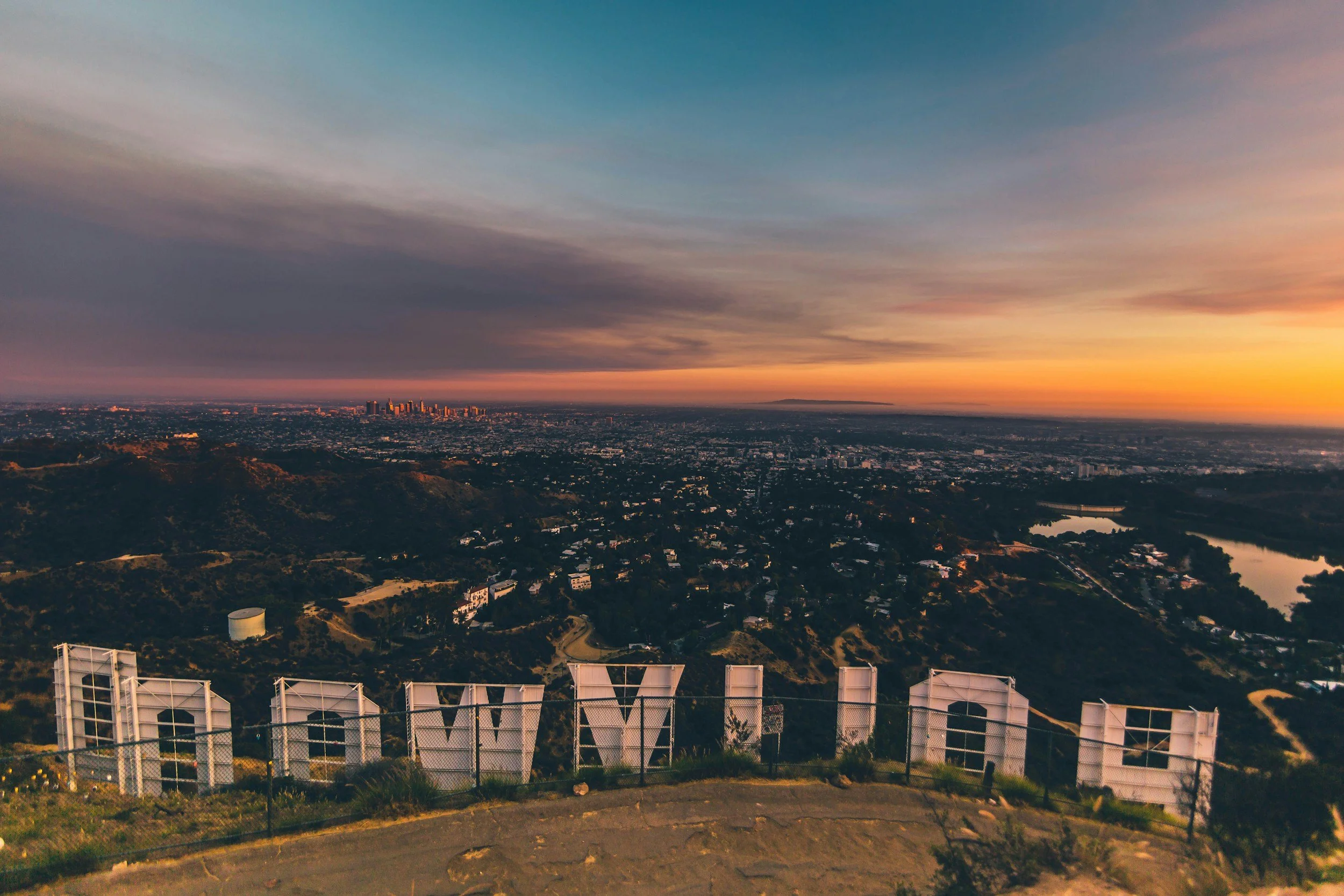
The view from above Hollywood, a city built by artists, now navigating one of its most uncertain chapters.
If you live and create in Los Angeles right now, there is a good chance you have felt something crack loose in the last year or two, a sense that the ground you built your career on is no longer solid.
That feeling is not a personal failing. It's a reasonable response to real conditions.
For many LA artists, exhaustion isn't a lack of discipline, it's a body responding to real instability.
The Problem You're Living Inside
Los Angeles has always asked its artists to be multi-passionate. Actor-bartenders. Editor-musicians. Therapist-podcasters. Grant writer-painters. For a long time, that patchwork worked because the city's creative economy was dense enough to hold it: film paid for the apartment, teaching paid for the studio, freelance graphic design paid for the tour.
That density is thinning. Film and television production in LA has fallen nearly 50% since 2019, and the county has lost roughly 42,000 to 57,000 entertainment jobs since 2022.
More than 80 businesses that service Hollywood, costume houses, prop shops, and sound stages, have shut down in the same window.
Sony alone cut hundreds of jobs this spring as part of a broader industry contraction. Some analysts are now comparing Los Angeles to Detroit after the auto industry collapsed there.
This is not just an entertainment story. It's an ecosystem story. When production dries up, the caterers, background actors, teamsters, costume designers, and rehearsal-space landlords all feel it. When a dance company like Bodytraffic or the LA Contemporary Dance Company closes, the studios, choreographers, and adjunct teachers who orbited them lose income too.
Los Angeles's creative economy still supports more than 312,000 workers, but the connective tissue between those jobs is fraying in visible ways.

Funding disappears, industries contract, and the future stays unclear, no wonder so many of us are left second-guessing ourselves.
Why It Feels Even Harder Right Now
On top of industry contraction, many Los Angeles artists have also watched public funding disappear.
In 2025 and again in 2026, the federal government moved to eliminate the National Endowment for the Arts, the National Endowment for the Humanities, and the Institute of Museum and Library Services, and didn't wait for Congress before rescinding grants that had already been awarded.
Los Angeles organizations like the Armory Center for the Arts, Clockshop, and Angel City Chorale lost hundreds of thousands of dollars in committed funding almost overnight.
One small performance space in LA reported losing nearly 75% of its grant funding after the 2024 election.
If you've felt confused about why support that used to exist for artists suddenly isn't there anymore, this is why. It isn't in your head, and it isn't because you didn't try hard enough.
At the same time, generative AI has introduced a new kind of uncertainty. The picture is genuinely mixed: some research shows AI is already displacing entry-level and production-based creative work and could cut music and audiovisual creators' income by 20–24% by 2028.
Other recent labor data suggests the disruption so far has been more about reorganizing how creative work happens than eliminating it outright. Both things can be true at once and living with that kind of unresolved uncertainty is its own particular strain on the nervous system.
What This Actually Does to You
When industries you depend on shrink at the same time, when funding disappears without warning, and when new technology makes the future of your field genuinely unclear, your body doesn't experience that as three separate news stories. It experiences it as sustained threat.
That's why so many multi-passionate LA artists describe feeling scattered, exhausted, or "unable to commit", not because they lack discipline, but because their nervous systems are trying to stay ready for instability on every front at once.
What might appear to be “flaky” to someone is an understandable somatic and embodied response to uncertainty and change. Chasing multiple income streams, multiple creative identities, multiple side projects isn't a character flaw, for many artists in this city, right now, it's the only reasonable strategy available.
A quieter moment of reflection — a chance to separate what's actually yours to carry from what belongs to the system around you.
A Different Way to Understand Yourself
You are not failing to be one thing. You are responding, intelligently, to a moment when almost nothing in the creative economy has held still. That reframe matters, because self-blame adds a second layer of exhaustion on top of the real external pressure you're already carrying.
Therapy can't reopen a shuttered dance company or restore an NEA grant. But it can help you tell the difference between what's actually yours to solve and what belongs to the system around you, so you stop absorbing every industry shift as personal evidence that you're doing something wrong.
A Pivot Isn't a Failure, It Might Be an Instinct
Underneath the uncertainty and change, there's often something else quietly happening: an intuitive pull toward something new.
That pull can feel disorienting, even shameful, especially when you're still grieving what's disappearing: a company, a scene, a version of your industry that once felt stable.
That grief is real, and it deserves space. You're allowed to mourn what's ending even while some part of you is already scanning the horizon for what's next.
It's worth remembering that some of today's most influential companies were born directly out of the 2008 financial crisis, when everything looked bleak and uncertain.
Airbnb started with two roommates renting air mattresses to cover rent after seven investors turned them down. Uber grew out of a founder's frustration over an overpriced Paris car ride during the depths of the recession. WhatsApp launched after its founders lost their jobs at Yahoo. None of these people set out to build empires, they were responding to instability, the same way you might be right now. Despite what these companies have become today, they started off small and were forged during similar times that we are living in today.
Your nervous system's pull toward reinvention isn't necessarily a sign that something is wrong with you. It might be intuition, picking up on the same signal that pushes any living system to adapt when its environment changes. That doesn't erase the fear or the loss; both can be true at once.
And artists know something that most industries have forgotten: how to make something out of nothing. That skill doesn't disappear because a grant got cut or a studio closed.
If there's ever been a moment to lean on your community, dream collectively, and build the next version of what creative life in this city looks like, this is it.
Not because the hardship isn't real, but because you and the people around you have always known how to create meaning, and futures, from precarity and uncertainty.
What Working Together Can Look Like
In sessions, we often start by naming what's actually happening — separating the external landscape from the internal story you've built about yourself inside it.
From there, we can work on:
Rebuilding a sense of pacing and self-trust after periods of chaotic hustling or forced reinvention.
Grieving industries, communities, or creative identities that have genuinely changed or disappeared.
Making values-aligned decisions about which passions and projects deserve your energy right now, without pretending the uncertainty isn't real.
Reconnecting to your creative work as a source of meaning, even while its economic conditions stay unstable.
Exploring the messages your body is sharing with you around new directions, pivots, or possibilities present within your life and career(s).
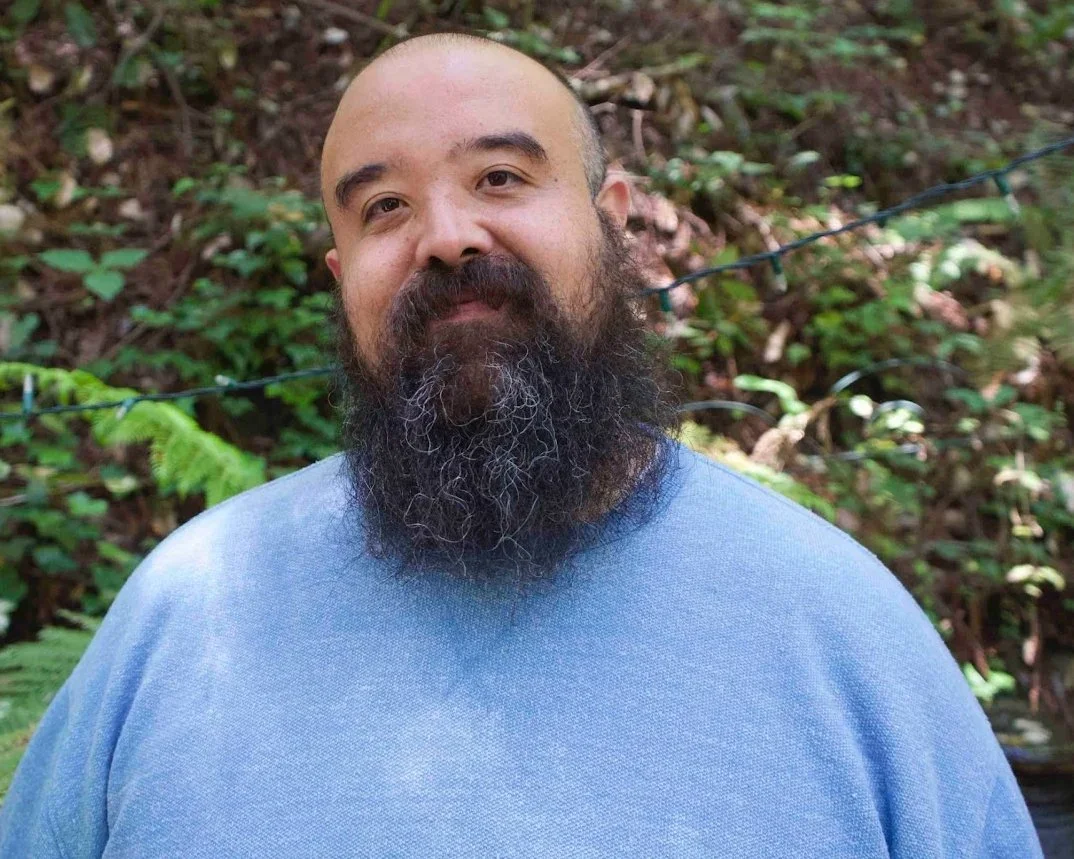
Edgar Fabián Frías, LMFT. Offering virtual therapy across California for artists, multi-hyphenates, and creatives navigating uncertain times.
You Don't Have to Carry This Alone
If you're a working artist, multi-hyphenate, or creative professional in Los Angeles feeling the weight of this moment, you're responding to something real, not failing to keep it together.
If you'd like support making sense of this season and finding your footing again, I offer virtual therapy in Los Angeles and across California and would be glad to talk with you about what that could look like.
Learn more about me or schedule a free 15-minute consultation with me.
Sources
LA Times — "Why family businesses that built Hollywood are closing"
Washington Times — "Hollywood employment drops 30% as productions leave California"
NY Post — "Fears grow of 'Detroit-Style' decline as Hollywood jobs evaporate"
National Today — "Sony Pictures to Lay Off Hundreds Amid Hollywood Decline"
LA Times — "Sony Pictures Entertainment to cut hundreds of film and TV jobs"
LA County DEO — "Interim Report on Potential Economic Impact"
Arts for LA — "April 2025: A Month of Action, Advocacy, and Resilience"
LA Times — "How dancers survive amid L.A. dance company closures"
Artillery Magazine — "Lost Money: How NEA Cuts Impact the Los Angeles Arts"
Cadenza — "The Elimination of the NEA: How America Defunded Its Own Culture"
Playbill — "National Endowment for the Arts Cuts Grants for Theatres"
LA Times — "Trump's 2027 budget aims to shutter the NEA, NEH and IMLS"
Creatives Unite — "AI set to slash creators' revenues by up to 24% by 2028"
UNESCO via brhrd.be — "Artists Face Steep Income Decline Due to AI"
The Guardian — "Music sector workers to lose nearly a quarter of income to AI"
Gallup — "AI Is Changing Creative Work, but the Arts Aren't Disappearing"