Leaving the Jehovah's Witnesses: What Happens to Your Nervous System After You Go

The moment of knowing can arrive quietly: in a park, in a crowd, in a space where no one can see what's shifting inside you. That aloneness is where many people's healing journey quietly begins.
I was fifteen years old, sitting at the park with friends, studying a text from the organization, when everything shifted.
In that moment, I understood, with a clarity that arrived all at once, that my queerness would eventually cost me everyone at that park. That I was already alone in a way no one around me could see. That if I was going to survive, I would need to find connections somewhere else entirely.
I remember sitting there quietly. Trying to act as if nothing had changed. Holding everything inside — the terror, the numbness, the grief — because I knew, instinctively, that I had to. That space was not safe for what I was feeling.
What I didn't have words for then, but have spent years understanding clinically and personally, is that this is exactly what happens to the nervous system when it encounters a threat too large to respond to openly. It goes quiet. It learns to perform normalcy while carrying an unbearable weight beneath the surface. And it holds that weight for a very long time.
What the Nervous System Does When There Is No Safe Exit
Leaving a high-control religious organization like the Jehovah's Witnesses is rarely a single event. For many people, it begins years before the actual departure, with a realization, a question, a moment of recognition that cannot be unseen.
During that in-between period, the nervous system is doing something extraordinary and exhausting: it is managing a double life. On the outside, you continue to perform belonging: attending meetings, saying the right things, being present in the community. On the inside, you are quietly preparing for a rupture that will cost you everything you've ever known.
This produces a particular kind of chronic stress response, one marked by hypervigilance, emotional numbing, and a persistent, low-level fear of being fully seen. For queer, trans, and gender-diverse members especially, this fear isn't abstract. It is the fear of being outed, shunned, and labeled an apostate, a danger to the very people you love.
The body learns to be small. To monitor every expression, every word, every reaction. And long after you leave, that learning doesn't simply disappear.

Grief is often vague, diffuse, or feels confusing when navigating the complex loss of identity, community, and culture that comes with leaving a high-control religious situation. Often we worry about those we’ve left behind.
The Grief That Has No Name
When people think about leaving a religion, they often expect grief to follow. What they don't expect is how total that grief can feel and how hard it is to name.
Leaving the Jehovah's Witnesses means losing not just a belief system but an entire world: your community, your social network, often your family, your sense of identity, and a direct felt connection to God that may have been one of the most real things in your life. The void this leaves is unlike most other losses. There is no funeral for it. No socially recognized mourning period. In many cases, the people who knew you best are now instructed not to speak to you.
For those who are disfellowshipped or who leave under pressure, there is an additional wound: being labeled an apostate, framed as a danger to the congregation, a threat to the people you love. This is not a small thing. It is a form of social death, and it lives in the nervous system as exactly that.
What I've witnessed in clients, and what I carried myself, is a grief that requires enormous soul-searching to even locate, let alone begin to move through. It led me to travel, to sit with my dreams, to seek connection in new places, and to trust, slowly, that a sacred inner life could still exist, even if it was going to look completely different than it had before.

The weight of what you've carried doesn't disappear when you walk out the door. Therapy with someone who truly gets your experience can help you understand what your nervous system has been holding, and begin to set it down.
Survivor's Guilt and the Weight of Knowing
One of the most underacknowledged experiences for those who have left high-control religious organizations is survivor's guilt.
Once you're out, once you begin to understand the full scope of the control, the exploitation, and the harm you were subject to, you are often confronted with a devastating awareness: the people you love are still inside. And you cannot reach them.
The Jehovah's Witnesses' practice of shunning means that leaving doesn't just cost you the community. It means that the community actively treats you as dangerous. Parents, siblings, lifelong friends may be instructed to cut contact entirely. The grief of this, the ongoing, unresolvable grief of people you love being unreachable, is one of the deepest wounds I see in this work.
And yet: the anger that eventually emerges from all of this is not something to be afraid of. In my clinical experience, anger, when it finally arrives, is often the turning point. It is the moment the nervous system stops collapsing inward and begins to reclaim its own authority. It catalyzes change. It helps people take back their stories, make meaning from what happened, and decide, on their own terms, how they want to live now.
What Healing Actually Looks Like
It is important to name directly: the Jehovah's Witnesses organization has caused, and continues to cause, significant harm, particularly to women, queer, trans, and gender-diverse members. That is not malice toward individuals within the congregation. Many of those people are doing their best within a system that limits them. But the harm is real, and naming it is part of healing from it.
What is equally important to name is this: there is a whole life available to you on the other side.
That life may include a relationship with God or spirituality — redefined entirely on your own terms, no longer mediated by an institution that demanded conformity in exchange for belonging. Or it may not. Both are valid. Both can be held with care.
Healing from high-control religious trauma is not linear. It moves through layers: the body first, then identity, then meaning-making, then, sometimes, something that feels like reclamation. It often includes working with:
Chronic hypervigilance — the body's learned habit of scanning for danger, even when you're safe
Emotional numbing — the protective shutdown that kept you functioning during years of double life
Identity reconstruction — rebuilding a sense of self that was once entirely organized around the organization
Grief and anger — both of which are not only normal but necessary
Survivor's guilt — learning to hold love for those still inside without sacrificing your own healing
Spiritual reclamation — finding, if you want it, a relationship with the sacred that belongs to you

Healing doesn't mean losing what was sacred. It means reclaiming your relationship to the sacred on your own terms — held gently, without force.
Why This Work Requires a Therapist Who Understands From the Inside
I've spent years in my own healing process, and years working clinically with those who've left the Jehovah's Witnesses, other high-control religions, and institutions that caused harm. I know this terrain, not just theoretically, but in my body, in my history, in the particular shape of the wound.
If you are somewhere in this process, just beginning to leave, years out and still carrying it, or somewhere in between, I want you to know that what you've survived is real, the grief is legitimate, and the life waiting for you on the other side is worth the terrifying work of getting there.
You are not an apostate. You are someone who chose yourself.
Ready to Begin?
I offer somatic, trauma-informed therapy for those healing from religious, spiritual, and institutional trauma — including Jehovah's Witnesses, high-control religion, cult recovery, and faith transitions.
Sessions are available via telehealth across California, including Los Angeles.
Learn more about therapy for religious and institutional trauma →
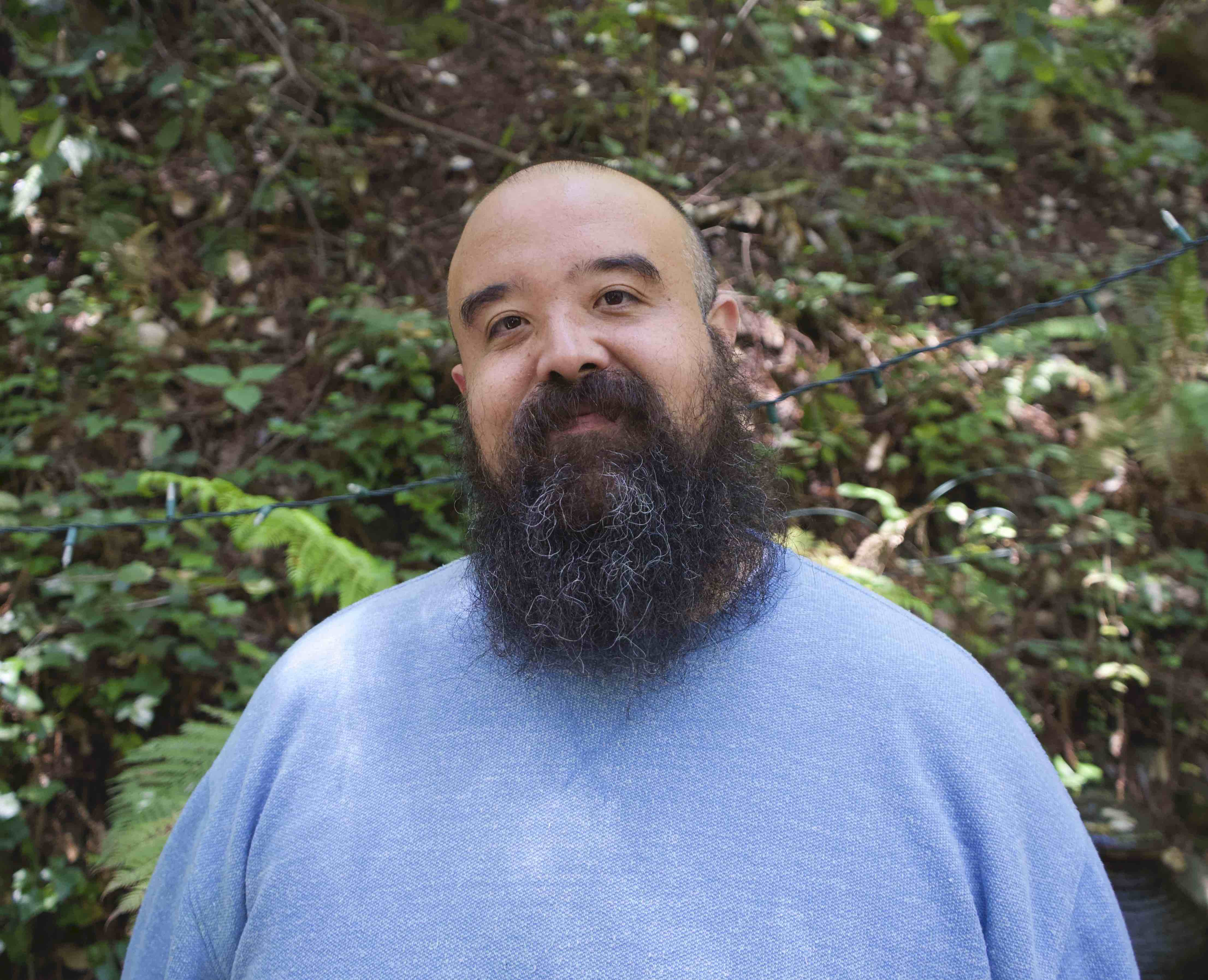
About the Author
Edgar Fabián Frías, LMFT is a licensed therapist, somatic practitioner, and multidisciplinary artist based in Los Angeles. Raised from birth within the Jehovah's Witnesses, Edgar brings both lived experience and clinical training to this work, offering affirming, body-centered therapy for those healing from religious trauma, institutional harm, and identity rupture — via telehealth across California.
References & Further Reading
Hassan, S. (1988). Combating Cult Mind Control. Park Street Press.
Lifton, R. J. (1961). Thought Reform and the Psychology of Totalism. W. W. Norton & Company.
van der Kolk, B. (2014). The Body Keeps the Score. Viking.
Winell, M. (2011). Leaving the Fold: A Guide for Former Fundamentalists and Others Leaving Their Religion. Apocryphile Press.
Porges, S. W. (2011). The Polyvagal Theory. W. W. Norton & Company.
Marlene Winell, PhD (2011). "Religious Trauma Syndrome." Cognitive Behavioural Therapy Today.
Dana, D. (2018). The Polyvagal Theory in Therapy. W. W. Norton & Company.
Recovery from Religion Foundation. (2024). Survivor Stories and Clinical Resources. recoveringfromreligion.com