When the MFA Almost Broke You: Healing from Art School Trauma

You came to grow. What happened instead has a name, and it is not your fault.
If you've ever left a graduate art program feeling like something essential was taken from you: your creative voice, your confidence, your joy in making. This post is for you.
Whether you're still inside a program wondering why it feels so wrong, a year out and still not making work, or someone considering applying who wants to go in with open eyes: what happened to you has a name. And you are not the problem.
What We Think an MFA Will Give Us
Most of us enter graduate art programs carrying a particular hope, one we might not even fully articulate until it's been disappointed.
By the time I started my MFA at UC Berkeley, I had already completed a Master's degree in clinical mental health counseling, had a solo exhibition, and had been part of the Tulsa Artist Fellowship.
I wasn't a student trying to find my voice. I was an established artist looking for something specific: mentorship, expansive dialogue, institutional support for where my work was already going, and — if I'm honest — a form of validation. The confirmation that I had arrived. That the art world's gatekeepers saw what my community already knew.
What I wanted, at its core, was a safe space for growth. What I found was something much more complicated.
The Moment You Realize Something Is Wrong
For many artists, the disillusionment arrives gradually, a slow erosion of confidence across semesters. For others, it arrives with terrible swiftness.
For me, it came early. We hadn't even settled into our first quarter when the toxic politics and dynamics of academia made themselves known, professors attempting to pit students against other professors, passing these dynamics through the student body like a current. Certain aesthetics favored. Certain conceptual approaches elevated. Others treated as silly, frivolous, or not rigorous enough.
I remember feeling it in my body before I had words for it: heat, a shrinking sensation, pain in my stomach. The particular embodied experience of being made to feel like your work, your vision, is somehow wrong.
I was fortunate. Before entering the program, I had spent years working with artists recovering from their own art school experiences. I had hosted residencies for people still healing from graduate programs. I knew, intellectually, what was coming. I had a web of artists and visionaries around me who believed deeply in my work. I came in prepared.
And it still got to me.
If it got to me — with all of that preparation — I want you to understand how predictable and systemic this harm is, and how completely it is not your fault.

Critique culture was designed to evaluate work. It was never designed to hold the person who made it.
What MFA Programs Actually Do to the Nervous System
Here is what I've observed clinically, and lived personally: most artists come to their creative practice through flow, a state of embodied, intuitive, often joyful making that bypasses the inner critic entirely. Art, at its origin, is a somatic experience. It lives in the body, in the inner child, in the part of us that doesn't ask permission.
Graduate programs, almost universally, replace this with something else: logical, linear, hierarchical thinking. Reading. Writing. Editing. Looking "critically." These are not inherently bad skills. But in most MFA programs they are taught at the expense of the embodied, intuitive, playful dimensions of making, the very dimensions that are the actual foundation of creative identity.
The result, for many artists, is a kind of creative paralysis that can last for years. Not a block, exactly — something deeper. A severing from the part of yourself that made art in the first place.
What makes this especially damaging is the intimacy of the wound. So many artists identify as their work, the way therapists identify with their clinical presence, or musicians with their sound. When that work is subjected to relentless critique without psychological containment or support, it isn't just the work that is being evaluated. It is the self.
My first Master's degree in Counseling was entirely focused on our subjective, psychological experience. We had containment. We had support. We were held.
My MFA operated as if the psychological interior of the artist was irrelevant, even dangerous to acknowledge. The work was to be examined "objectively," "critically," free from the messy business of why we made it or what it costs us to put it into the world.
This is not rigorous. It is, clinically speaking, a setup for harm.
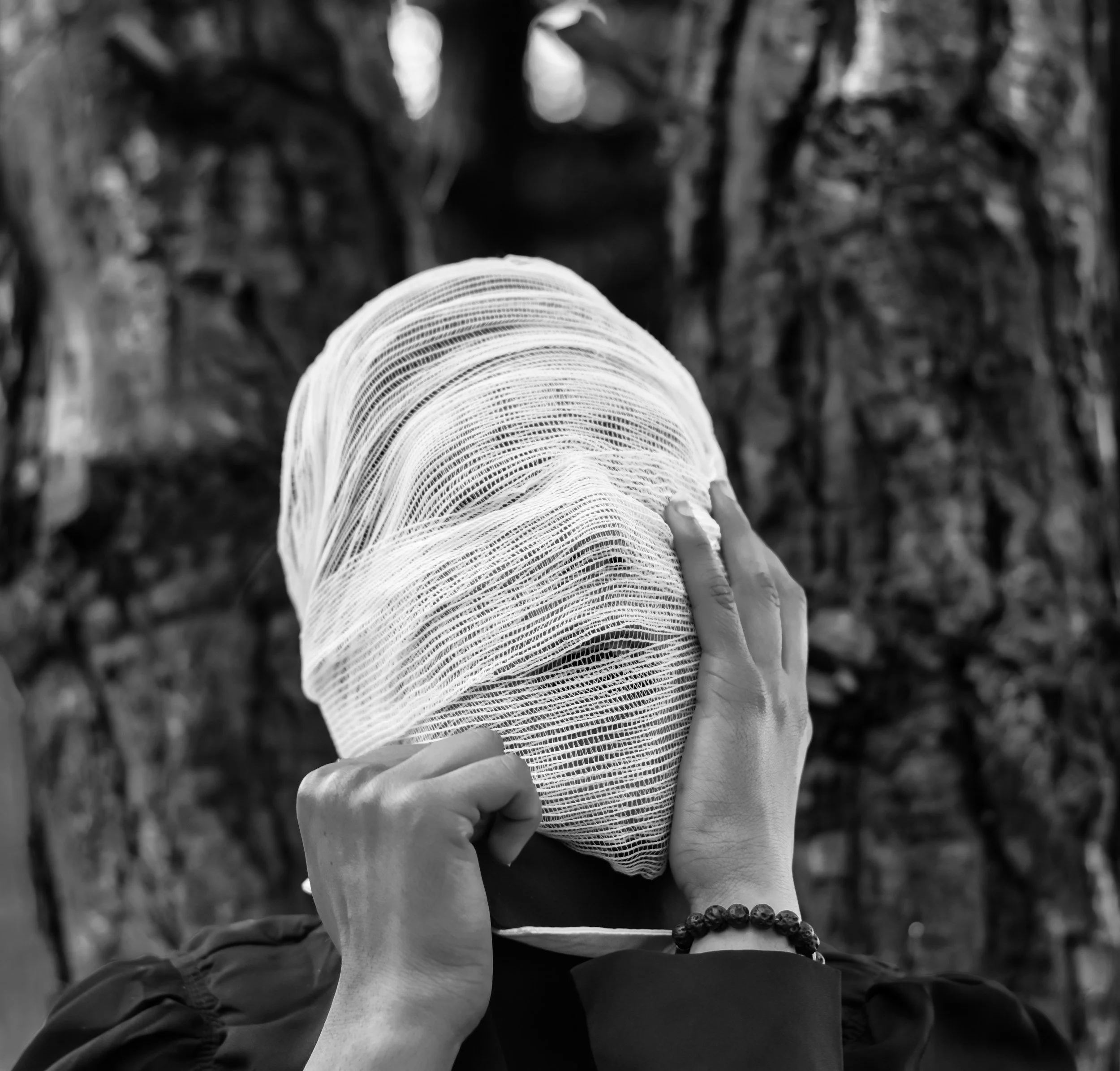
Creative paralysis is not a lack of talent. It is the nervous system protecting itself after a wound it was never given language for.
The Systemic Wounds That Don't Get Named
My cohort at UC Berkeley was the first in the program's history to be composed entirely of people of color. The program and institution were not ready for us.
We were not given the practical knowledge that artists, particularly artists from marginalized communities, desperately need: how the art world actually works financially, the business logistics of sustaining a practice, the relational dynamics and dangers of the gallery system, contractual protections, the specific forms of exploitation that target artists of color. We were given theory. We were given critique. We were not given tools.
The disproportionate labor placed on women, femmes, and artists of color was visible and unaddressed. The professors who tried to ameliorate the harm — often the women and faculty of color — absorbed enormous personal and emotional labor that the institution neither acknowledged nor supported.
Critique, which comprises much of an MFA education, was often facilitated by people with no training in group dynamics, no tools for managing collective consciousness, and no framework for understanding trauma. Toxic patterns emerged and were not named. Interpersonal dynamics from the faculty spilled into student cohorts. Some students bullied others, stole aesthetics, spoke ill of peers to secure their own position.
And the institution held no one accountable. Because the institution was the source.

The moment you realize something is deeply wrong, and that you are carrying it entirely alone, is often when the nervous system begins to shut down.
What Creative Paralysis Actually Is
The most consistent wound I see in clients who've been through harmful MFA or art school experiences is not imposter syndrome, though that's present. It's not perfectionism, though that's there too.
It's a disconnection from the healing function of art itself.
Most of us came to making because it felt like medicine. Because it allowed the inner child to move freely, without judgment. Because intuition flowed in those moments in ways it couldn't anywhere else. To then have that experience routed through "art history," "critique," and institutional hierarchies, to have your most instinctive creative gestures subjected to a framework of correctness, is to lose access to the very thing that made making worth it.
People stop making. Not because they lack ideas or talent, but because the act of making has become associated with exposure, judgment, and shame. The studio becomes a site of anxiety rather than refuge.
I watched people in my own program stop making entirely. Some have taken years off. The creative fire that brought them to graduate school in the first place, that luminous, specific thing, was systematically discouraged until it went quiet.

Healing is available wherever you are. Virtual somatic therapy for artists, creatives, and MFA survivors across California. On your schedule, in your own space.
What Healing Looks Like
The first and most important thing that needs to happen in healing from art school trauma is the redistribution of blame.
So many artists carry enormous shame and guilt about how they left a program, what they said or didn't say, what they made or didn't make, how they responded to the harm. This burden needs to be named clearly and redirected: the system did this. The harm was structural. The abuse was real. It was not a reflection of your talent, your vision, or your worth as an artist.
When that naming happens — when the shame begins to lift — something else often arrives: grief, anger, and beneath both, the first tentative stirrings of the creative self that went underground.
The anger especially is important. In my clinical experience, anger in this context is not a problem to be managed. It is the signal that the system's verdict has been rejected. It is the nervous system beginning to reclaim its own authority.
From there, healing involves:
Reconnecting with the body — returning to the somatic, embodied experience of making before the institution got hold of it
Recovering the inner child artist — the part of you that made art for joy, for mystery, for the pleasure of it
Understanding the system — seeing clearly how institutional trauma recycles itself and why people inside these systems hurt others
Rebuilding self-trust — learning to hear your own intuition again after years of having it overridden
Grieving what was taken — including the version of the MFA you hoped for, the mentor you deserved and didn't get, the years of making you lost
For me, recovery involved returning to the web of artists, witches, and visionaries who had always held my work with care. It involved re-membering — literally, putting back together — the importance of my own inner voice as a guide. And it involved understanding, with compassion, how much suffering exists inside those hierarchical systems, and how that suffering causes people to harm others, especially those who represent a freedom they cannot access themselves.

Most of us arrive at graduate programs carrying real hope. The gap between what we expected and what we found is where the wound lives.
Before You Apply: What I Wish Someone Had Told Me
If you are considering an MFA, I want to be honest with you, not to discourage you, but because I believe going in with open eyes makes you more resilient, not less.
Most programs are not equipped to hold the psychological experience of making. Critique culture, as it currently exists, is not trauma-informed. The art world's hierarchies are real, and they have teeth and are incredibly racist, misgoynist, homophogic, transphobic, and ableist.
Marginalized artists, queer artists, artists of color, neurodivergent and highly sensitive artists, will often face compounded harm in environments that were not designed for them.
And yet: there are good mentors inside these systems. There are cohorts that become chosen family. There are ways to protect yourself, to build your support structures before you enter, to know in advance that the institution's assessment of your work is not the final word on its value.
Your creative voice existed before the program. It will exist after.
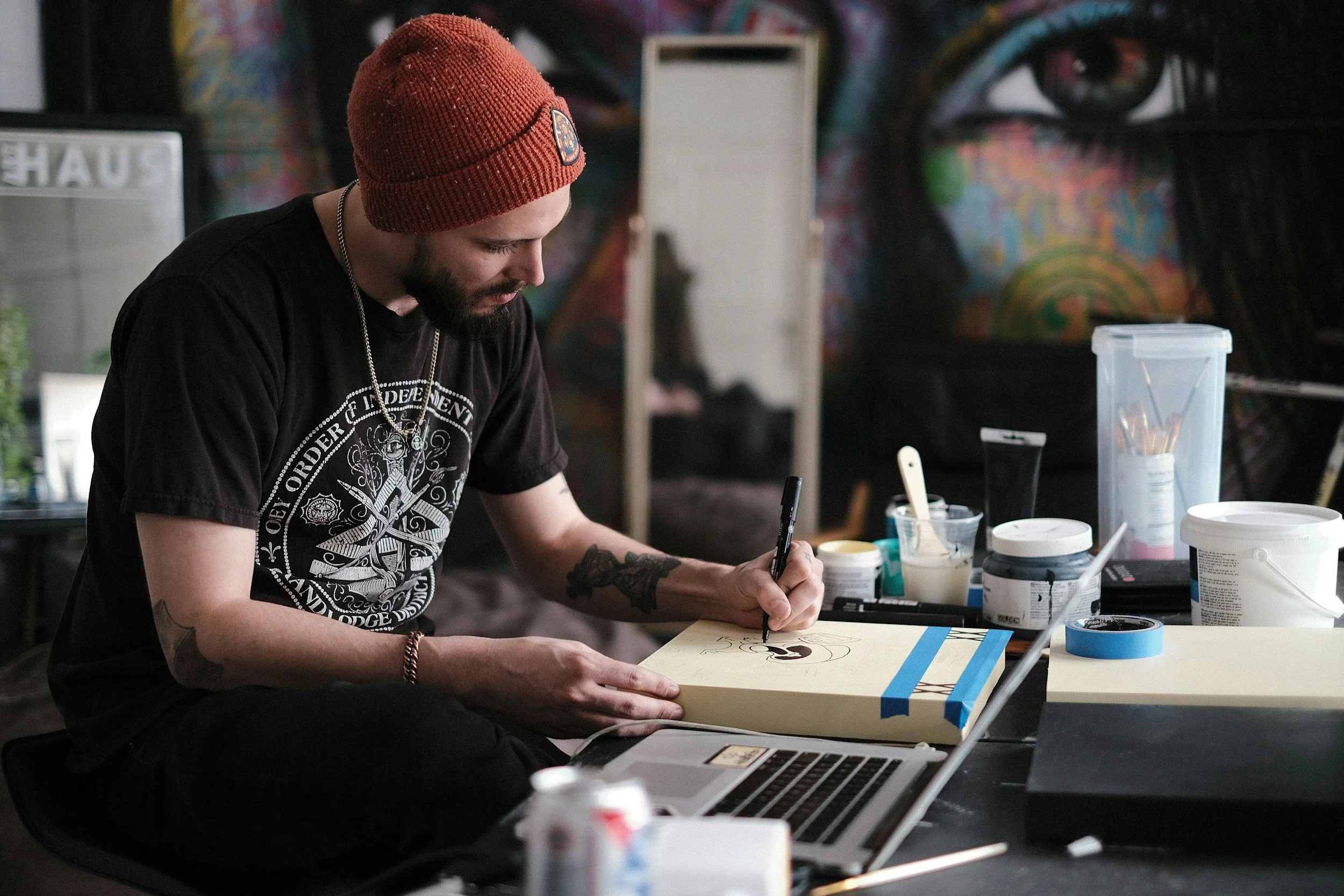
Your creative fire was there before the program got hold of it. Therapy is about finding your way back to it — on your own terms, in your own time.
Ready to Begin Healing?
I offer somatic, trauma-informed therapy for artists, creatives, and multi-hyphenates healing from art school, MFA programs, and academic institutional trauma — as well as for those navigating creative paralysis, perfectionism, and the long work of reconnecting with their artistic voice.
Sessions are available via telehealth across California, including Los Angeles.
Learn more about therapy for artists, creatives, and neurodivergent adults →
Learn more about therapy for institutional and academic trauma →
About the Author
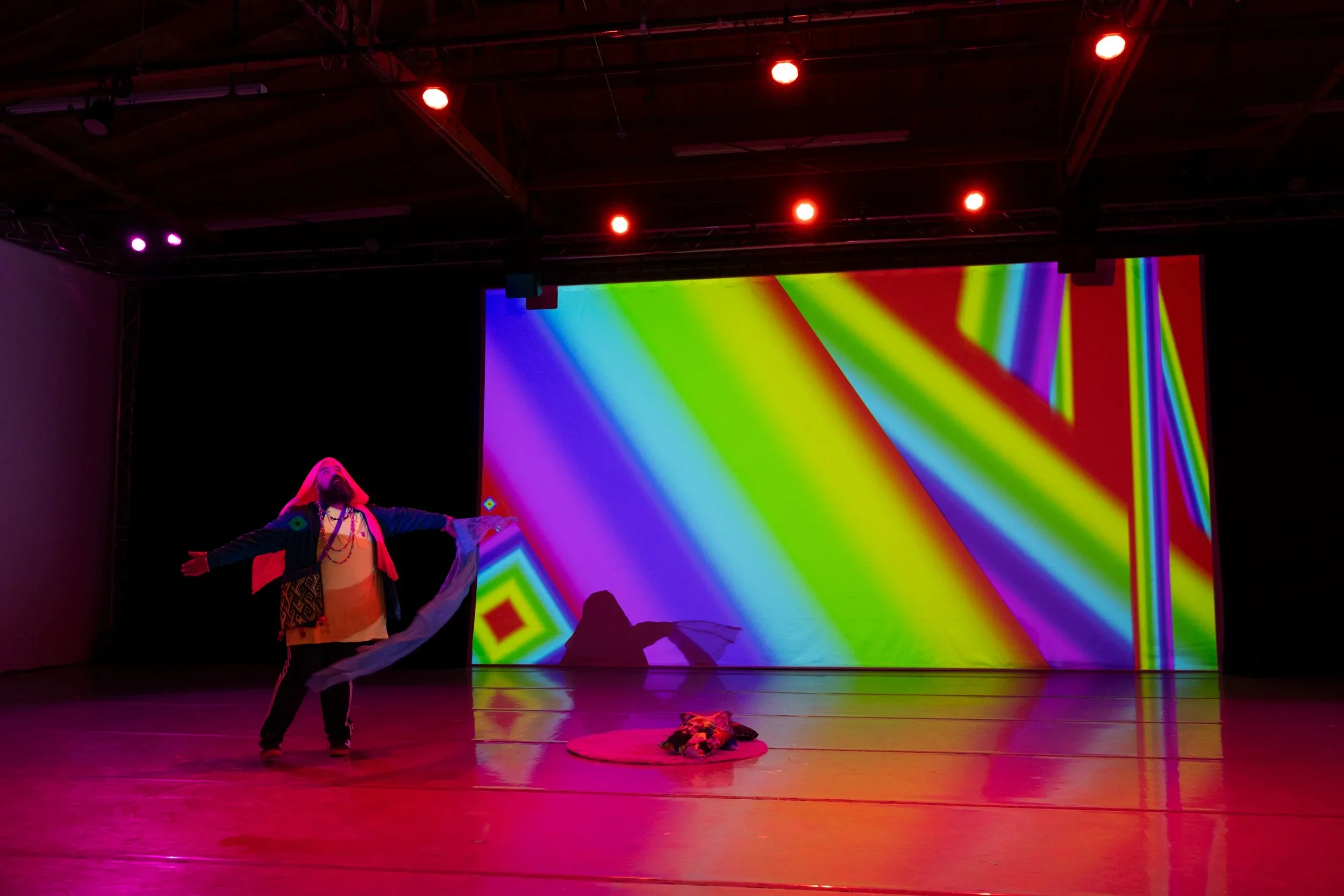
Edgar Fabián Frías, LMFT, MFA is a licensed therapist, somatic practitioner, and internationally exhibited multidisciplinary artist based in Los Angeles. He holds an MA in Clinical Mental Health Counseling and an MFA from UC Berkeley, and brings both lived experience and clinical training to his work with artists healing from institutional harm. He offers affirming, body-centered therapy via telehealth across California.
References & Further Reading
van der Kolk, B. (2014). The Body Keeps the Score. Viking.
Levine, P. A. (1997). Waking the Tiger: Healing Trauma. North Atlantic Books.
Winnicott, D. W. (1971). Playing and Reality. Tavistock Publications.
hooks, b. (1994). Teaching to Transgress: Education as the Practice of Freedom. Routledge.
Ahmed, S. (2012). On Being Included: Racism and Diversity in Institutional Life. Duke University Press.
Csikszentmihalyi, M. (1990). Flow: The Psychology of Optimal Experience. Harper & Row.
McNiff, S. (1992). Art as Medicine: Creating a Therapy of the Imagination. Shambhala Publications.
Porges, S. W. (2011). The Polyvagal Theory. W. W. Norton & Company.