When Your Body Keeps the Score of Doing Too Much: Burnout, the Nervous System, and the Multi-Passionate Life
For the artists, the creatives, the neurodiverse multi-hyphenates, and everyone who keeps going, until they can't.
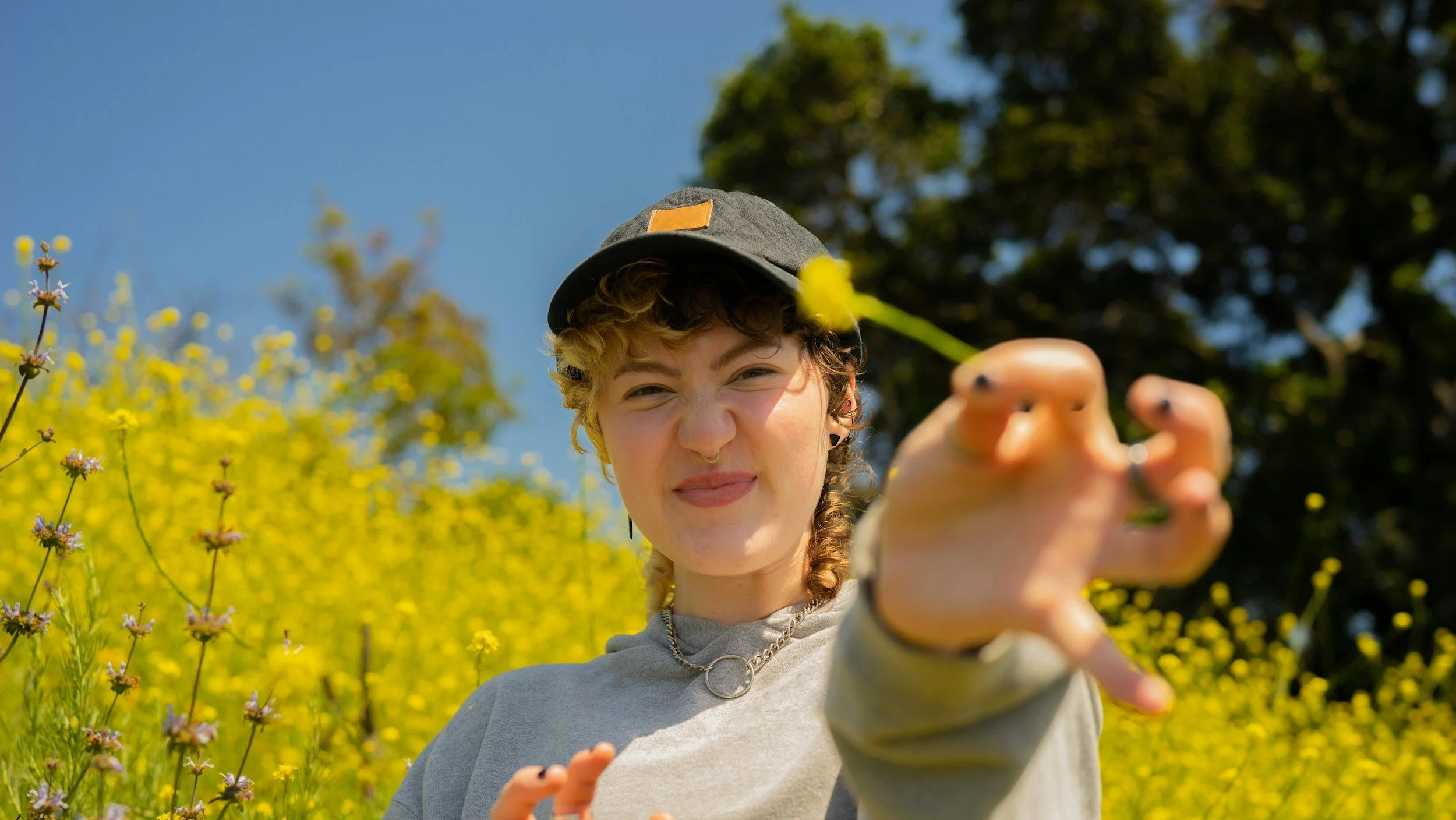
Living a life of multitudes often means navigating high sensory input and deep emotional processing—a gift that requires a resilient nervous system.
You know how to hold a lot at once. You always have.
There's the project you're finishing, the one you're starting, the collaboration you said yes to because it genuinely excites you, the creative practice that feeds your soul, the work that pays the bills, and the approximately forty-seven other ideas you've jotted into your notes app at 2am. You are someone who lives wide. Someone who contains multitudes. Someone who, if you're being honest, wouldn't have it any other way.
And yet, your body might be trying to tell you something.
As a therapist in Los Angeles who is also an artist, an entrepreneur, and someone who has held more roles simultaneously than I can count, I know this terrain from the inside.
I know what it is to keep it together through the installation, through the deadline, through the launch, and to finally get sick the moment it's over. I know what it's like to mistake depletion for discipline, and to keep going long past the point where the going is sustainable.
This piece is for you. Not to tell you to slow down or do less. But to help you understand what's actually happening in your body when you live the multi-passionate life, and why therapy, the right kind, can be one of the most powerful things you do for your creativity, not in spite of your ambition, but because of it.
The "Finishing the Project" Phenomenon
Let's start with something you may have experienced but never had language for.
You power through. The opening, the deadline, the big push. You run on adrenaline and coffee and the particular electricity of being deeply in something. And then, the moment it's over, the moment you finally stop, you get sick. Or you crash. Or something in you just goes offline in a way that feels disproportionate to the relief you expected to feel.
This isn't weakness. This is biology.
During periods of intense stress and sustained output, your body floods with cortisol, the stress hormone that keeps you alert, focused, and functional. One of cortisol's less-discussed side effects is that it temporarily suppresses your immune system, essentially telling your body: we don't have time to deal with a cold right now, we're surviving. Your immune system listens. It holds everything at bay, waiting for the threat to pass.
The moment you stop? Cortisol drops. Your immune system finally has room to respond, and presents its bill. The cold you didn't catch during the run gets caught the second you land. The illness you couldn't afford to have arrives right on time to interrupt your rest. The body, which was holding on for you, finally lets go.
Psychologists sometimes call this the "Let Down Effect", and for multi-passionate, high-output creatives, it can feel like a recurring punishment for productivity. It isn't. It's your nervous system doing exactly what it was designed to do. But it's also a signal that something in the cycle needs to change.

For multi-passionate people, the line between passion and projects is thin, often leading to a "Vitruvian" exhaustion from tending to too many versions of self.
Why Multi-Passionate People Burn Out Differently
Burnout among creatives and artists isn't the same as workplace burnout, though the word often gets used the same way. For people who live across multiple disciplines, who are artists and therapists and entrepreneurs and writers and community builders, burnout tends to be more complex, more layered, and more quietly devastating.
For one thing, the line between work and identity is thin to nonexistent. When your passions are also your projects, and your projects are also your livelihood, and your livelihood is also the expression of who you are there's nowhere to retreat. You can't leave work at the office when work is you. Burnout in this context doesn't just drain your productivity. It threatens your sense of self.
Research into the creative industries has found a widespread and longstanding mental health crisis among creative professionals, driven specifically by this entanglement of passion and work, what researchers call the "paradoxical allure" of creative careers. The very love you have for what you do is the thing that makes it hardest to set it down.
And then there's the multi-passionate dimension: the particular exhaustion of having too many things you genuinely care about, too many threads you're following, too many versions of yourself that all require tending. Decision fatigue, overcommitment, the pressure to make the "right" choice about where to invest your energy, these aren't flaws. They're the honest cost of living wide in a world that prefers you to stay narrow.
Neurodivergent burnout isn't just about doing too much; it’s the cumulative cost of masking and navigating spaces not designed for your unique wiring.
Neurodivergent Burnout: A Different Animal Entirely
If you're also neurodivergent, ADHD, autistic, or otherwise wired differently, the burnout picture has another layer that deserves its own conversation.
Neurodivergent burnout isn't simply doing too much. It's the cumulative cost of continuously having to be someone you're not. It builds slowly through masking, the ongoing labor of suppressing your natural sensory responses, communication styles, and cognitive patterns in order to appear "normal" in spaces not designed for you. You can be a brilliant, high-functioning, deeply creative person and be burning out simultaneously, precisely because so much of your energy is going toward the performance of neurotypicality rather than the actual work of living your life.
For ADHD brains specifically, there's a recognizable cycle that many people will find painfully familiar: the hyperfocus phase, where a new project delivers an intoxicating flood of dopamine and everything clicks into high gear; followed by the crash, when the novelty fades or the project ends and the system, depleted from the intensity, goes offline. Each pass through the cycle can leave the recovery harder and the crashes longer. Over time, what started as passion can start to feel like a liability.
This is not a character flaw. It is a nervous system pattern, and it can change.
What Highly Sensitive People Know About Burnout (That Others Often Miss)
For highly sensitive people (HSPs), burnout has a particular quality that is easy to miss because it doesn't always look dramatic. It looks like slowly going numb. Like withdrawing from things that used to bring joy. Like a creeping difficulty being present in your own life.
Highly sensitive people process stimuli more deeply and more intensely than others, which is the source of enormous creative gifts: the ability to notice subtlety, feel deeply, and make connections that others miss. It's also why the sensitive nervous system can become overwhelmed so much more quickly.
What barely registers for someone else can land with full weight on an HSP, the crowded opening, the difficult email, the ambient noise of a city like Los Angeles, the emotional residue of a difficult session or a charged creative collaboration.
HSP burnout often doesn't announce itself with a collapse. It announces itself with persistent fatigue that doesn't respond to rest, increasing emotional flatness, heightened reactivity to things that didn't used to bother you, and a growing sense of disconnection from the work and people you love.
If this sounds familiar, it's worth paying attention to, not because something is wrong with you, but because your nervous system is communicating something important.

Somatic therapy helps you move from the "Let Down Effect" into a space where your whole self, the artist, the thinker, the sensitive being, is exactly enough.
What Your Nervous System Is Actually Holding
Here's the throughline beneath all of this: whether you're a multi-hyphenate creative, a neurodivergent artist, a highly sensitive person, or all three at once, your nervous system is keeping score.
It's keeping score of every deadline you pushed through. Every time you overrode the signal that said I need to stop.
Every performance you gave in a room that didn't fully understand you. Every mask you wore in a space that asked you to be less than you are. Every project you carried alone because asking for help felt like admitting failure.
This isn't stored in your mind as a list of grievances. It's stored in your body, in the chronic tension, the shallow breath, the sleep that doesn't restore, the difficulty transitioning between states, the way your system stays on alert even when the threat has passed.
Nervous system dysregulation isn't weakness. It is a learned survival response, shaped by years of high output, high masking, and high sensitivity in a world that wasn't always built for how you're wired.
The good news is that the nervous system is not fixed. It is plastic, responsive, and capable of healing.
What Somatic Therapy Offers That Talk Therapy Often Can't
This is why I work somatically.
Talk therapy has tremendous value, and also real limits. You can spend years talking about the patterns without your body actually changing its response. That's not a failure of insight. It's a feature of how the nervous system works: the body doesn't update its threat assessments just because the mind understands something intellectually.
Somatic therapy brings the body into the room. Through practices like Hakomi, Parts Work, Somatic Experiencing, and mindfulness, we work with what your system is actually holding, the sensations, the contractions, the places where you brace or go numb or disconnect. Not to analyze them from a distance, but to meet them with curiosity and care.
For multi-passionate creatives, this can look like learning to recognize the difference between genuine excitement and the adrenaline-driven hyperactivation that you've been mistaking for it.
It can look like building a relationship with rest that doesn't feel like failure. It can look like identifying the moment your system moves into survival mode, before the crash, not after.
It can look like finally having a space where your whole self, the artist, the healer, the thinker, the sensitive being, the person who contains multitudes, is not too much, but exactly enough.
"Am I Burning Out, Or Is This Just Who I Am?"
This is one of the most common questions I hear, and it deserves a real answer.
Some of what feels like burnout is burnout. Some of it is the accumulated cost of masking, overextending, and overriding your body's signals for years. And some of it, the intensity, the sensitivity, the capacity to feel everything at high volume, is genuinely, beautifully who you are. The goal of this work isn't to dull those qualities. It's to help you sustain them. To help you live from them rather than despite them.
You are not too much. You are not broken. You are someone whose system has been working very hard, for a very long time, without adequate support, and who deserves to finally receive some.
What I Bring to This Work
I am an artist, a therapist in private practice, and an entrepreneur, and I have two master's degrees across fields that required me to hold complexity from the very beginning.
I understand the multi-passionate life not from a clinical distance, but from the inside. I have kept it together through large art projects, art openings, and multi-tiered deadlines and then gotten sick the moment they were over.
I have felt the particular exhaustion of being a sensitive, creative, neurodiverse person in a world that moves too fast and asks too much.
That's not background information. That's the foundation of how I work.
In Los Angeles or greater California, where the pace is relentless and the creative demands are real, I offer a space that was built with you in mind: the artist, the entrepreneur, the multi-hyphenate, the highly sensitive and neurodivergent person who is ready to stop just surviving their own life and start actually inhabiting it.
You Don't Have to Burn Out to Deserve Support
You don't have to hit the wall to justify asking for help. You don't have to be in crisis to benefit from having a space that holds you. And you don't have to choose between your creativity and your wellbeing, they are not in opposition. They are, in fact, deeply interdependent.
I currently have limited availability for new clients in my Los Angeles practice. If you're a creative, a multi-hyphenate, a neurodivergent or highly sensitive person who is ready to go deeper, I'd love to hear from you.
Your work needs you. Which means you need you, too.
Sources & Further Reading
Psychology Today (2024). Burnout and Neurodiversity.psychologytoday.com
NeuroSpark Health (2025). Understanding Neurodivergent Burnout.neurosparkhealth.com
Medical News Today (2024). Neurodivergent Burnout: Symptoms, Causes, Recovery.medicalnewstoday.com
Highly Sensitive Refuge (2024). 9 Signs You're Suffering from HSP Burnout.highlysensitiverefuge.com
Artsy (2019). Artists Share Their Advice on Preventing Burnout.artsy.net
Creatives Unite Europe (2025). Longstanding Health Crisis in Creative Industries Linked to Passion-Driven Work.creativesunite.eu
Premier Integrative Health (2026). The Immune System's Checkpoints: Why You Keep Getting Sick After Stressful Events.premierintegrativehealthkc.com
Cleveland Clinic (2023). Stress and Your Immune System.health.clevelandclinic.org